
Marketing Collateral

Results at a Glance
- Scalable workflow: My intake system helped reduce turnaround times, clarify expectations, and reduce miscommunication – allowing me to juggle a steady stream of design requests while staying focused on high-priority work.
- Cross-functional collaboration: I worked directly with multiple teams and stakeholders to bring campaigns, resources, and internal materials to life – learning how to translate feedback quickly into tangible, on-brand outputs.
- Design with purpose: Whether it was converting veterans into care or reinforcing facility performance, each piece of collateral was built to do more than just look good – it was designed to deliver a message, drive a goal, or build trust.
- Consistency at scale: By centralizing collateral design, I helped create a more recognizable and unified brand across internal materials and external outreach.
Becoming the Go-To Designer
Starting in late 2023, I became the go-to designer for all product and marketing collateral across the company. Whether it was building external lead magnets or internal posters, I owned the creative direction, execution, and stakeholder communication – while balancing this alongside my sprint-based product work.
To keep everything moving, I built a structured intake system, worked cross-functionally with teams across the org, and looked for ways to raise the quality, consistency, and impact of our brand through thoughtful design.
My Process
I set up a request system in Monday.com, collaborating with a project manager to create a form that routed collateral needs directly to me. Over time, I iterated the form to address recurring issues like vague requests, unclear timelines, or missing assets – helping stakeholders better communicate needs while allowing me to prioritize effectively.
I received requests from all levels of the org – VPs, executive directors, managers, and outreach associates – and regularly partnered with them to turn ideas into polished deliverables. Most of my work was done in Figma and Canva, with Adobe Creative Suite used for more complex needs.
Before taking on 100% of the collateral myself, I also managed another designer – deciding which tasks to delegate and helping streamline communication between them and business stakeholders.
Veteran Lead Magnet & Landing Page
One of my most impactful projects was a lead generation initiative targeted toward veterans seeking addiction treatment. I partnered with the VP of Military Affairs, a content writer, and a project manager to create a downloadable PDF guide, supported by a branded landing page template that could be reused for future campaigns.
I focused on veteran-aligned visuals and accessible layouts to make the guide feel trustworthy and relevant. The page itself was designed to balance SEO value and conversion, with a structure that made it easy to swap content while preserving the core framework.
The campaign became one of our most successful content-driven lead sources, directly bringing in more veteran inquiries and admissions.

Facility Survey Graphics
Another widely used project involved turning facility-specific patient survey data into branded, printable posters. The data came from SurveyMonkey exit surveys, organized into categories like satisfaction with services, preparedness for recovery, and staff professionalism.
Each facility received its own version, incorporating real patient quotes and icons for visual clarity (e.g., a thumbs-up icon for satisfaction ratings). I prioritized key metrics near the top of each poster, with lesser ones placed further down.
To maximize value, I also repurposed the designs into social media graphics for our brand and communications team – turning positive internal feedback into public-facing brand stories.
The posters boosted morale across facility teams and gave comms new content that reinforced credibility and care quality.

Business Card & Sticker Redesign
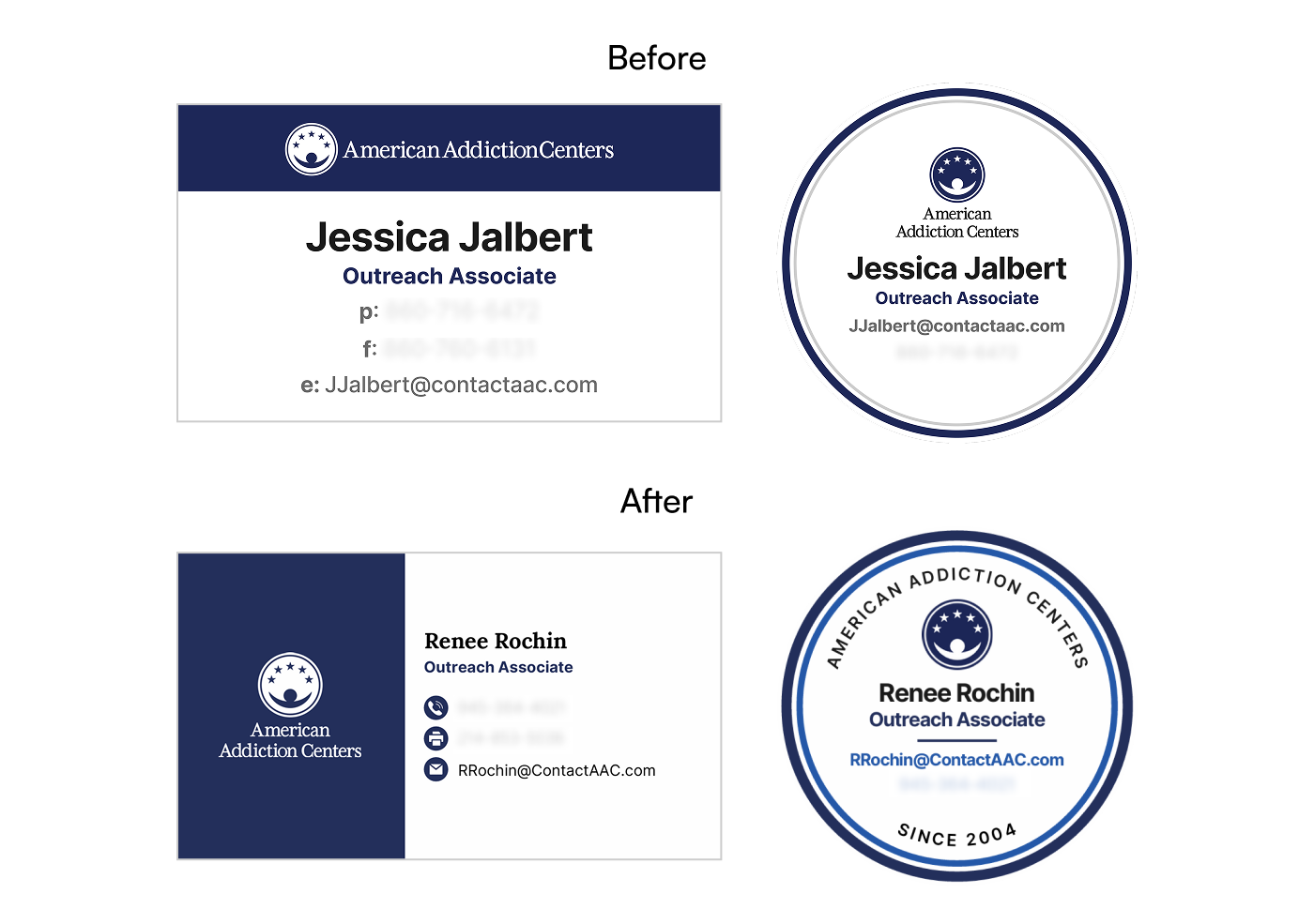
As the company grew, I was receiving an increasing number of business card and sticker requests. I realized these assets hadn’t been updated since I joined, and saw an opportunity to give them a modern, cohesive refresh.
I redesigned both using our latest brand elements – updating typography, spacing, and layout to feel more clean, polished, and consistent with our digital presence. The new designs were more compact, professional, and aligned across departments.
The updated assets became the new standard across teams and regions, replacing a patchwork of older designs with something more unified and representative of the brand.
Reflection
Owning the company’s marketing and product collateral was a challenging but valuable experience. Building a structured intake system helped streamline requests and set clear expectations, which was essential for managing volume and prioritization alongside my product work.
Working cross-functionally with stakeholders from all levels taught me the importance of translating diverse feedback into cohesive, purposeful designs that drive results, whether generating veteran leads or boosting facility morale. Briefly managing another designer reinforced how clear communication and delegation scale quality work.
If I could do it again, I’d focus more on educating stakeholders early about brand guidelines to reduce vague requests. Overall, this work strengthened my skills in collaboration, systems thinking, and design strategy, making me a more effective and adaptable designer.